Lawyers representing a 20-year-old woman are set to argue that Instagram and YouTube deliberately designed addictive features that harmed her mental health, as opening statements begin in a landmark social media trial. The case is the first of hundreds of similar lawsuits against major tech companies to reach trial.
The plaintiff, identified only by her initials, KGM, along with her mother, alleges that Meta and Google-owned YouTube intentionally created platforms that kept her hooked from a young age, contributing to anxiety, body dysmorphia and suicidal thoughts. Attorneys for Meta and YouTube are expected to counter that KGM’s mental health struggles stemmed from a difficult family background rather than social media use.
The verdict could have wide-ranging implications, potentially shaping the outcome of roughly 1,500 related lawsuits nationwide. An adverse ruling for the companies could expose them to billions of dollars in damages and pressure them to make significant changes to their platforms.
During jury selection in Los Angeles state court, KGM’s lawyer, Mark Lanier, said the evidence would show that Instagram and YouTube were intentionally engineered to maximize engagement among young users. “She became consumed by these platforms; her mental health declined,” Lanier said. “Her childhood, and therefore her adulthood, deviated from a normal path.”
Opening statements were delayed after a Meta attorney experienced a health issue and followed nearly two weeks of jury selection.
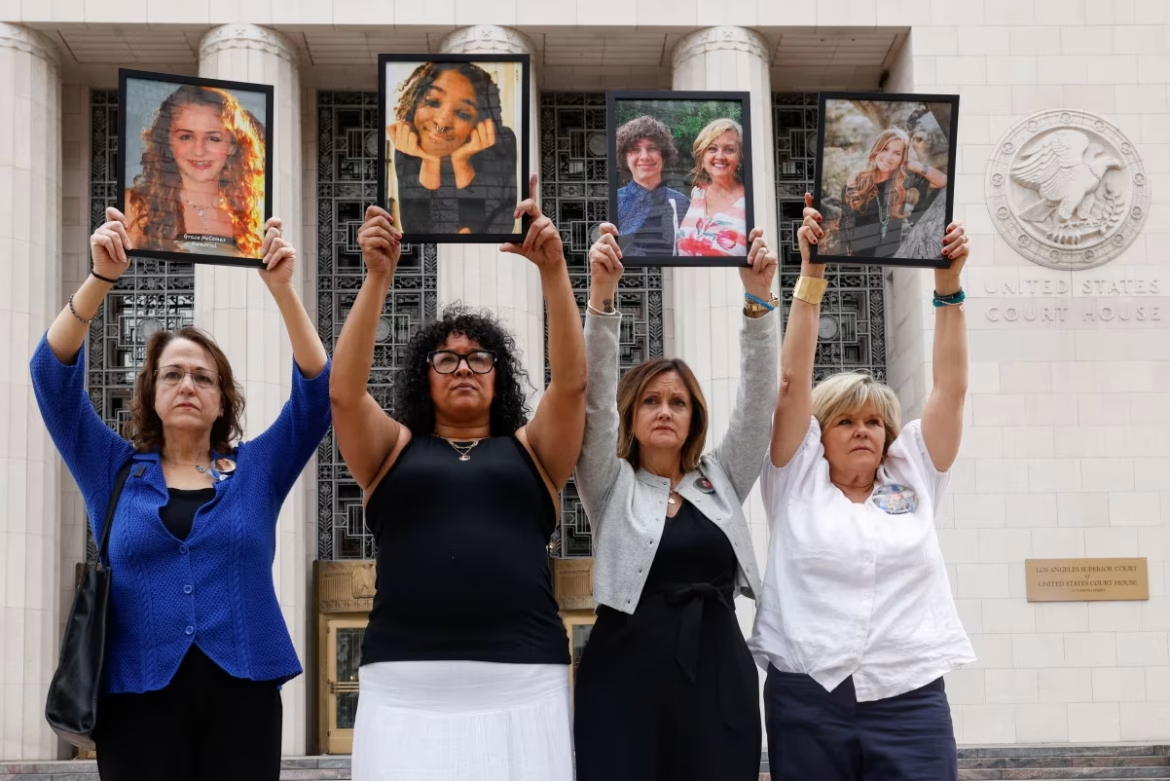
Parents and child safety advocates have described the trial as a pivotal moment after years of calls for stronger online protections for minors. High-profile tech executives, including Meta CEO Mark Zuckerberg, Instagram CEO Adam Mosseri and YouTube CEO Neal Mohan, are expected to testify in the coming weeks.
KGM also filed lawsuits against Snap and TikTok. Both companies settled ahead of trial, though they remain defendants in other cases.
Meta and YouTube have long denied that their platforms harm young users, pointing to safety measures such as parental controls, screen-time reminders and content restrictions. A Meta spokesperson said the company “strongly disagrees” with the allegations and is confident the evidence will demonstrate its commitment to supporting young people. A YouTube spokesperson described the claims as “simply not true,” saying youth safety has always been central to the platform’s work.

Claims of an addictive design
Details that emerged during jury selection offered insight into the arguments to come. According to Lanier, KGM began using YouTube at age 6 and Instagram at age 9. Lawyers for the companies said she sometimes spent six to seven hours a day on YouTube and several hours a day on Instagram, despite her mother’s efforts to limit access using third-party software.
The lawsuit alleges that features such as endless scrolling feeds, frequent notifications and appearance-altering filters contributed to KGM’s mental health issues. It also claims she experienced bullying and sextortion on Instagram, a form of online blackmail involving explicit images.
The defense is expected to emphasize KGM’s personal circumstances. Her parents divorced when she was young after an abusive relationship, and her mother largely raised three children on her own. Defense lawyers argue that parental control, not platform design, could have limited her social media use.
Lanier acknowledged the defense’s likely strategy, telling potential jurors they would hear arguments that KGM’s family situation made her more vulnerable but that the platforms’ design features created an addictive “loop” that worsened her condition.
Jury selection highlighted the broad and often conflicting views people hold about social media. Some potential jurors voiced concern about its effects on children, society and even older adults, while others stressed parental responsibility in monitoring online activity.
The final 18 jurors will be allowed to continue using social media during the trial. However, Los Angeles Superior Court Judge Carolyn Kuhl has instructed them not to seek out information about the case or alter their social media settings in response to claims made during the proceedings.